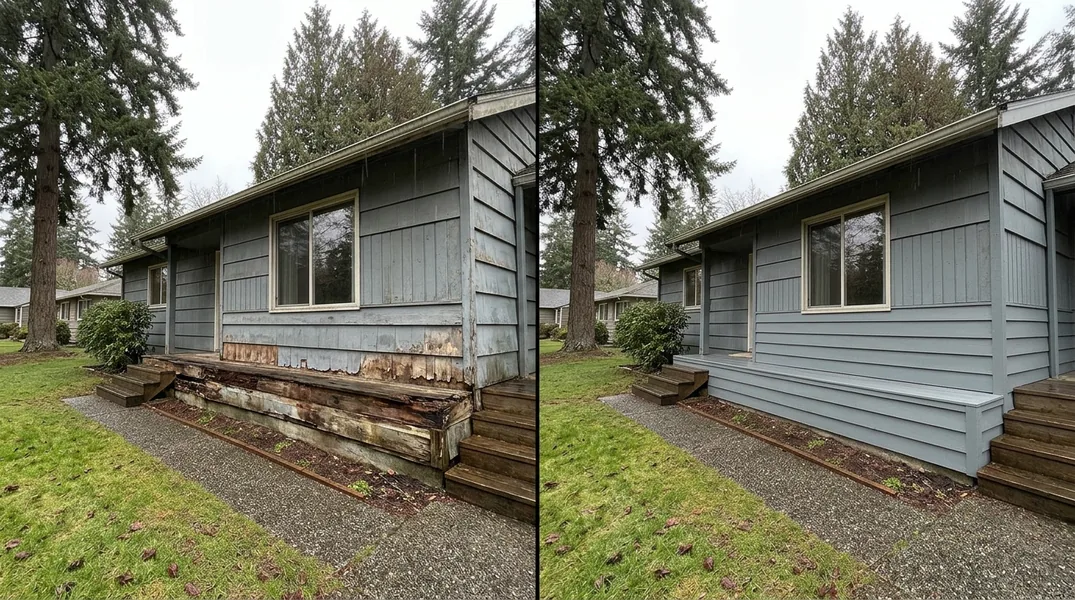
Why Identifying Wood Damage Early Matters in Tacoma
The Pacific Northwest climate, with its wet winters and damp conditions, creates an ideal environment for wood-destroying pests and fungi. Homeowners in Tacoma face a unique challenge: distinguishing between different types of wood damage to determine the right course of action. Whether it's dry rot, carpenter ants, or termites, each problem requires a different treatment approach and can have serious structural implications if left unchecked.
The stakes are high. Undiagnosed wood damage can compromise the structural integrity of your home, leading to costly repairs down the line. Many homeowners mistake one type of damage for another, which delays proper treatment and allows the problem to worsen. By learning to recognize the telltale signs of each threat, you can catch problems early and reach out to a professional for free estimate before significant damage occurs.
What Does Dry Rot Look Like and How Is It Different?
Dry rot is a fungal disease that thrives in damp wood with poor ventilation. Despite its name, dry rot actually requires moisture to develop, though the wood it attacks becomes brittle and dry as the fungus spreads. Understanding what dry rot looks like is crucial for early detection. The affected wood typically develops a distinctive cubic cracking pattern, where the wood shrinks and splits into small cubes or blocks. The surface may appear darker than surrounding wood, and you might notice a musty, earthy odor emanating from the affected area.
One of the most telltale signs of dry rot is the presence of white or gray fungal growth, which can look like cotton or cobwebs on the wood surface. As the decay progresses, the wood becomes increasingly soft and crumbly, losing its structural strength. In Tacoma homes, dry rot commonly appears in crawl spaces, basements, around windows and doors where water infiltration occurs, and in areas with poor drainage. If you suspect dry rot in your home, Wood Rot & Dry Rot Repair is essential to prevent the fungus from spreading to other structural elements.
Carpenter Ant Damage: What to Look For
Carpenter ants are large black or reddish ants that tunnel through wood to create nesting galleries. Unlike termites, carpenter ants do not eat wood; instead, they excavate it to build their colonies. Carpenter ant damage often appears as clean, smooth tunnels inside the wood, and you may notice sawdust-like debris (called frass) near the affected areas. This frass is actually finely shredded wood that the ants have removed from their galleries. The presence of this material is one of the most reliable indicators of active carpenter ant infestation.
Another sign of carpenter ant damage is the appearance of small, perfectly round exit holes in the wood surface, typically about 1/8 inch in diameter. You might also hear rustling or tapping sounds coming from inside walls or wooden structures, especially at night when carpenter ants are most active. Unlike termites, carpenter ants prefer wood that is already softened by moisture or decay, so you'll often find them in areas where water damage or dry rot has already begun. If you discover carpenter ant damage in your home, prompt Wood Rot & Dry Rot Repair combined with pest control measures is necessary to stop the infestation and repair the structural damage.
Dampwood Termites and Other Termite Damage Signs
Dampwood termites are particularly common in the Pacific Northwest and pose a significant threat to homes throughout the region. These termites are larger than their subterranean cousins and require wood with high moisture content to survive. Dampwood termite damage typically involves extensive tunneling through the wood grain, leaving behind a honeycomb-like structure. Unlike carpenter ants, termites consume the wood as they tunnel, so you won't find piles of sawdust. Instead, you may notice mud tubes on the exterior of wood or foundation walls, which termites use to travel while maintaining moisture.
One of the most telling signs of termite activity is the presence of swarmers, which are winged termites that emerge during spring and early summer to establish new colonies. You might also notice discarded wings near windows or light fixtures. Termite damage can be catastrophic because entire colonies work together to consume wood at a rapid rate. The wood may sound hollow when tapped, and you might notice blistering or buckling of paint on wood surfaces. Termite Damage Repair requires immediate professional attention, as the extent of damage is often much greater than what's visible on the surface.
How to Conduct a Visual Inspection at Home
Start your inspection in areas most vulnerable to moisture and pest activity. Check crawl spaces, basements, attics, and areas around plumbing penetrations or roof leaks. Look for visible fungal growth, wood discoloration, soft or crumbly wood, and any of the debris patterns mentioned above. Pay special attention to wooden beams, joists, and sill plates, as these structural elements are common targets for all three types of damage. Use a screwdriver or awl to probe suspicious areas; if the tool sinks easily into the wood, decay or damage is likely present.
Don't overlook exterior areas. Check wooden siding, trim, deck posts, and areas where wood meets soil or concrete. Look for mud tubes near the foundation or on wooden structures, which indicate termite activity. If you notice any combination of the warning signs described above, or if you're uncertain about what you've found, it's time to call in a professional. A trained inspector can provide a thorough assessment and recommend the appropriate repairs. Contact Tacoma Carpentry at (253) 498-6752 to schedule a free estimate and get expert guidance on your specific situation.
Professional Repair Solutions Near Me: When to Call a Carpenter
Once you've identified wood damage, professional repair is essential to restore your home's structural integrity. Depending on the type and extent of damage, repairs may range from targeted wood replacement to more extensive Floor Joist & Subfloor Repair or even Beam Replacement & Load-Bearing Wall Removal in severe cases. Professional carpenters have the expertise to assess the full scope of damage, often finding problems that aren't immediately visible. They can also coordinate with pest control specialists if termites or carpenter ants are involved, ensuring that both the pest issue and the structural damage are properly addressed.
The cost of professional repair varies depending on the location, type, and severity of damage. Early detection and prompt repair can significantly reduce expenses, while delayed treatment often results in exponential cost increases as damage spreads. Tacoma Carpentry serves homeowners throughout the area with comprehensive wood damage assessment and repair services. We understand the unique challenges that Pacific Northwest weather presents to local homes. If you suspect wood damage of any kind, don't wait. Call us at (253) 498-6752 or visit our website to request a free estimate today. Our team will help you understand your options and develop a repair plan that protects your home's value and safety.
Looking for a professional carpentry contractor in Tacoma? Tacoma Carpentry responds fast for all your carpentry needs.
Get a Free QuoteOur services: Wood Rot & Dry Rot Repair · Termite Damage Repair · Floor Joist & Subfloor Repair