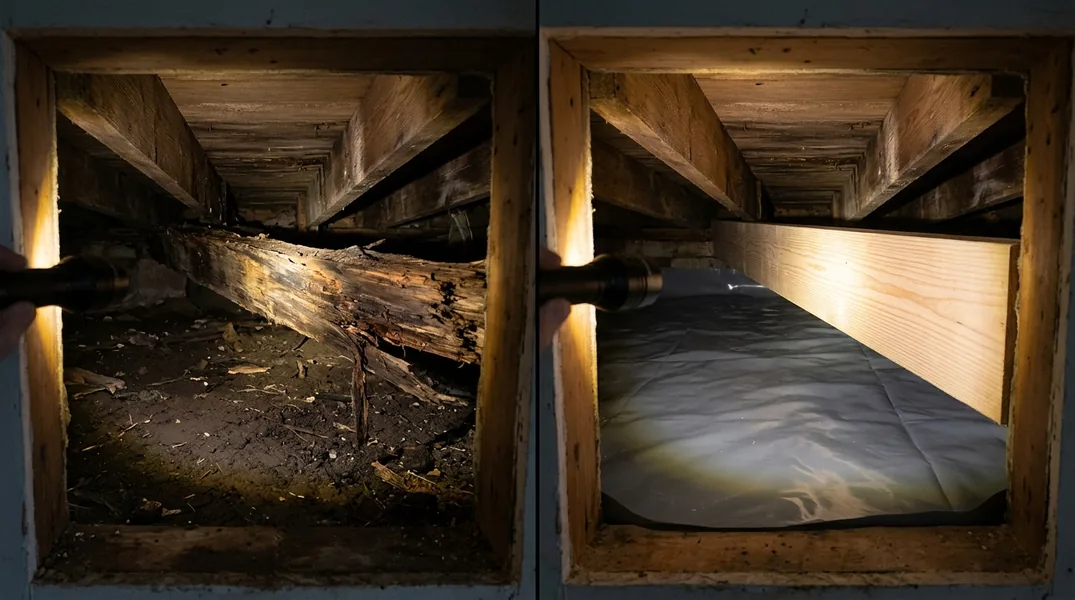
Why Are Your Floors Sagging? The Crawl Space Connection
If you own an older home in Tacoma, you may have noticed your floors dipping or feeling soft underfoot. This is rarely a cosmetic problem. Sagging floors are typically a sign that the structural support system beneath your home is failing, and the culprit is often lurking in your crawl space.
Crawl spaces in older Tacoma homes were often built with minimal ventilation and inadequate moisture control. Over decades, this environment becomes the perfect breeding ground for wood-eating fungi and insects. The Pacific Northwest's wet climate makes this problem even more common. When the wooden beams, joists, and support posts in your crawl space begin to rot, they lose their load-bearing capacity, and your floors start to settle and sag.
The process is gradual but relentless. You might notice it starts with a slight bounce in your kitchen or a door that no longer closes properly. Within a few years, if left unaddressed, the sagging becomes more pronounced and the structural integrity of your entire home is at risk.
Understanding Crawl Space Rot: Dry Rot vs. Wet Rot
Wood Rot & Dry Rot Repair requires understanding what you're dealing with. While the terms are sometimes used interchangeably, dry rot and wet rot are two different problems, and both can cause catastrophic floor sagging.
Wet rot occurs when wood moisture content exceeds 20 percent for an extended period. This is the most common type found in crawl spaces because standing water, poor drainage, and high humidity create ideal conditions. Wet rot spreads more slowly than dry rot but is equally destructive. The wood becomes soft, dark, and loses structural strength. Dry rot, on the other hand, can spread rapidly through a crawl space even in relatively dry conditions. It appears as a gray or brown dust-like substance and can travel through masonry and concrete, making it especially dangerous in foundation areas.
Both types of rot weaken the wood fibers that support your floors. A beam that once safely carried thousands of pounds of load may become so compromised that it can barely support its own weight. This is why sagging floors demand immediate professional attention.
Floor Joist & Subfloor Repair: What's Actually Damaged
Your floor system consists of several components working together. The primary support beams run perpendicular to the house, and floor joists span between them, typically spaced 16 inches apart. The subfloor sits on top of the joists, and then comes your finished flooring. When rot attacks this system, it typically starts with the joists and subfloor because they're most exposed to moisture.
Floor Joist & Subfloor Repair is not a simple patch job. A professional inspection will determine which components need replacement versus reinforcement. Some joists can be sistered (reinforced with new lumber bolted alongside the damaged section), while others need complete removal and replacement. The subfloor may need selective replacement in affected areas, or in severe cases, the entire subfloor must be removed and rebuilt.
The complexity of this work is why DIY attempts often fail. Improper repairs can create new structural problems or leave hidden rot that continues spreading. A qualified carpenter will assess the extent of damage, determine load paths, and ensure that any repair work meets building codes and restores full structural integrity to your home.
Sagging Floor Repair Cost in Tacoma: What to Budget
The pricing for sagging floor repair varies widely depending on the severity of damage, the size of the affected area, and what components need replacement. A minor repair affecting just a few joists might cost between $2,000 and $5,000. A moderate repair involving significant joist replacement and subfloor work typically ranges from $5,000 to $15,000. Severe cases requiring structural beam replacement or extensive foundation work can exceed $20,000 or more.
These costs reflect the labor-intensive nature of crawl space work, the cost of quality lumber and materials, and the specialized knowledge required. Many homeowners are shocked by these figures, but consider the alternative: ignoring sagging floors leads to accelerating damage, foundation settling, and eventual structural failure that could cost $50,000 or more to address comprehensively.
The best way to understand your specific situation is to schedule a free estimate with Tacoma Carpentry. We'll inspect your crawl space, identify all problem areas, and provide a detailed breakdown of what needs to be done and what it will cost. Call us at (253) 498-6752 to arrange an inspection.
When to Call a Professional for Floor Joist Repair Near Me
You don't need to wait for catastrophic failure to take action. Several warning signs indicate it's time to call a professional. Beyond visible sagging, watch for squeaky or bouncy floors, doors and windows that stick or don't close properly, cracks in drywall or plaster, or a musty odor coming from your crawl space. Any of these can signal structural problems that need immediate evaluation.
Attempting to repair floor joists without proper knowledge and equipment is dangerous. Crawl spaces are cramped, often contain mold spores and other hazards, and working beneath a house requires understanding of load distribution and temporary support systems. A professional contractor will have the tools, experience, and insurance to do the work safely and correctly.
Tacoma Carpentry specializes in identifying and repairing the hidden structural problems that plague older homes. We've spent years working in crawl spaces throughout Tacoma, and we know exactly what to look for. If you're concerned about sagging floors or suspect crawl space problems, don't delay. Contact us today at (253) 498-6752 or visit our website to request a free estimate.
Prevention: Protecting Your Crawl Space Going Forward
After your floors are repaired, preventing future rot is essential. Crawl space maintenance should include proper ventilation, moisture control, and regular inspections. Many older homes lack adequate vapor barriers or have damaged ones. Installing or replacing a vapor barrier reduces moisture accumulation significantly. Ensuring gutters and downspouts direct water away from the foundation prevents water from pooling near your crawl space.
Regular inspections, ideally every 1 to 2 years, catch problems early before they become expensive repairs. Look for signs of moisture, soft wood, or insect damage. If you notice anything concerning, have a professional evaluate it promptly. The cost of preventive maintenance is far less than the cost of major structural repair.
Your home is likely one of the largest investments you'll ever make. Taking care of the often-overlooked crawl space is one of the most cost-effective ways to protect that investment and ensure your family lives in a safe, structurally sound home for years to come.
Looking for a professional carpentry contractor in Tacoma? Tacoma Carpentry responds fast for all your carpentry needs.
Get a Free QuoteOur services: Wood Rot & Dry Rot Repair · Termite Damage Repair · Floor Joist & Subfloor Repair